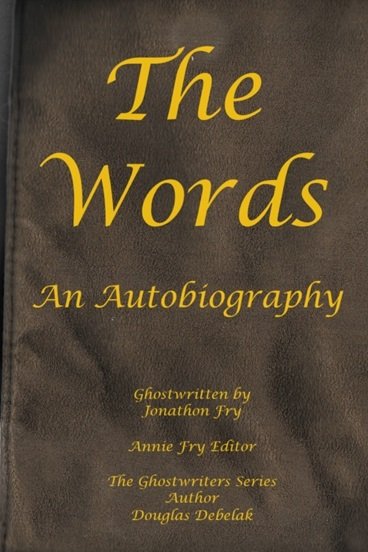
Titles by Douglas Debelak



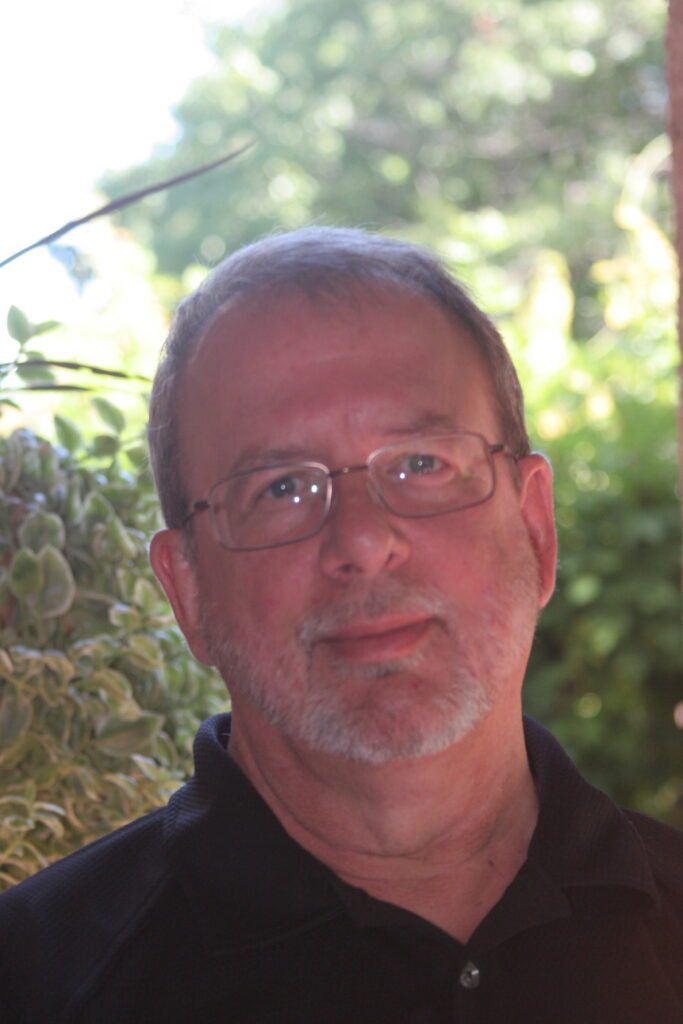
Biography of Author Douglas Debelak
I would much prefer to have my biography written by someone else and, therefore, presented objectively in the third person. But, until I can afford to hire a publicist or persuade a friend, whom I trust to be honest, preferably more honest than myself, we are both stuck with me and my clearly subjective and highly biased effort. Given this, I believe the most authentic approach is to own up and proceed in the first person.
I don’t remember being born, nor do I trust what appear to be my earliest childhood memories, nor, at times, even memories from events that took place only moments ago. So, I can only conclude that what I am about to present will be as fictional as anything else I’ve written. Then again, hasn’t everything ever written been filtered through that human’s imagination, if only to seek out the words and phrases to express best what we believe to be true? Or hope we can convince you to believe it is true.
Not my first memory, of that I am fairly certain, perhaps not a memory at all, but a clear recollection nonetheless, was the subject of sex seeming to be such a taboo topic in our household, that I became so fixated on learning what was behind such a whispered about behind closed doors, dark, secret, sin-ridden mystery that its eventual discovery alone would surely send me directly to hell. I’m not sure I’ve ever escaped that sense of forbiddenness, nor, clearly, even at my advanced age, the fixation.
Another event I don’t remember, but according to my mother, I must have been a natural-born storyteller even as a child, since I persuaded the rest of my kindergarten class that I could tell a better story than the teacher. I apologize for not remembering whether I ever told the story I promised, let alone recall what that might have been. That, unfortunately, was lost to history. I suspect I intended to make it up, since that is what I do.
The teacher, being new and flustered by such brazen challenges to her authority, told my mother that she didn’t know how to handle such behavior. To the young woman’s horror, being strongly opposed to corporal punishment, my mother promptly demonstrated what she called “butt shock therapy.” Whatever the teacher’s beliefs, I bet that I never disrupted her class again, whether or not I believed I had a better story to tell.
I repeated first grade, thanks to my inability to pay attention in school, due to boredom, and having more interesting stories floating through my imagination to tell myself than those I promised my kindergarten classmates. Even though I was a year older than my classmates, I remained smaller than most and wore glasses, making me a natural target for bullies. Add having a mouth that, as I was to discover, would have been far more clever had I learned to keep it shut, since, together with the preceding, it was not a good combination for navigating grade school unscathed, with the unsurprising consequence of regularly suffering one of my classmates’ version of “butt shock therapy.”
Like other bored-to-death, imaginative children, I was never a good student in those early days, spending more time daydreaming than paying attention in class. However, for some unknown reason, while not deluding myself about my undersized prospects in professional sports, I also read an entire set of encyclopedias, cover to cover, front to back, in alphabetical order, as well as many of the other books in our home. I must have read The Old Man and the Sea half a dozen times before I was twelve. I can’t begin to calculate how many other titles, but a decent enough swathe through the classics, that, despite my best efforts to make no effort, I didn’t emerge from grade school utterly illiterate and uneducated; a fact which also didn’t go unnoticed by my mother or other adults in my life, who continued to regularly remind me how if I’d only apply myself, I could be anything I wanted to be. More on that later. So, fast forward through junior and senior high school; to keep this brief, I managed to graduate, if barely. After which, with a red-flag combination of poor grades and high standardized test scores, I was unsurprisingly rejected by nearly every college to which I applied, until finally receiving the acceptance letter from the state school across the state line, where, no disparagement intended, to an excellent school, most of my fellow underachieving classmates had also enrolled.
Growing up being raised in the church, I initially entered college with the notion of becoming a Presbyterian pastor; however, that prospect apparently left me no more inspired than I’d ever been, and, like my fellow underachieving classmates, I might as well have majored in beer drinking off campus and playing cards in the student union. After a lackluster year and a half, I dropped out, met a girl, found a factory job, and got married.
The End.
Or not quite, since one afternoon, idly observing an older co-worker staring vacuously into space, I had the epiphany: If I didn’t immediately start doing something dramatically different, I was staring down my vacuous self in another forty-odd years. The prospect of which I found far more boring than school had ever been. So, I re-enrolled at the state school across the state line, where most of my underachieving former classmates had also dropped out, had their own epiphanies, or at least showed up to class enough to earn diplomas.
A class in philosophy, with a marvelous professor, led me to question every belief I had previously held, incidentally freeing me from an enormous weight I hadn’t been aware I’d been bearing, leading me to switch my major from religion to philosophy, where questions, at least then, were encouraged rather than branded a lack of faith or heretical, as they had been at church. I went on to earn a degree in philosophy, graduating with honors, despite my initial lackluster year and a half, and I was accepted into a PhD program in Phenomenology and Existentialism at Northwestern University.
Arriving in Evanston, IL, I first discovered ‘Great Expectations,’ at the time, one of the country’s premier philosophy bookstores. It also came to my attention that during my latter undergraduate years, I’d subconsciously compiled an extensive list of philosophy titles I expected to read, and suddenly finding seemingly all of them on the shelves, led to a stark, great expectation-altering realization that if I sat and immediately began reading, never eating or taking a bathroom break again, I couldn’t possibly read all th books on my list in a single human lifetime. So, if nothing else, during my brief stay at the graduate program focusing on Phenomenology and Existentialism, I did learn the definition of ‘finitude.’
Second, all I’d wanted to do, perhaps all I’d ever wanted, was to discuss ideas with other intelligent people, whom, in this instance, I found, to my disappointment, did not care to share theirs, for fear of some nefarious fellow student or professor stealing them before they had an opportunity to publish. And here I’d thought the whole purpose of grad school was discussing such ideas to determine whether any had enough merit to pursue further. And what were those ten percent, fortunate enough to earn their PhD, then find employment in their field, going to do with a classroom full of students anxious to discuss ideas? Talk about a den of potential thieves. In retrospect, I suppose, if I’d had the patience to endure, I might have enjoyed a den of thieves anxious to discuss whatever ideas I cared to share. And if any found a few worth stealing, go with my blessing. Wasn’t that the point? It wasn’t as though there’d ever been many rich philosophers running about. Not even the famous ones.
I returned home, disillusioned and ashamed of my failure, and after suffering a period of depression, I decided to try writing, which seemed a logical alternative for speculative thinking, sharing ideas, and asking, “What if…?”
Only to be short-lived. Learning that I was to become a father, after several twists and turns, a son then daughter, I decided, if I was going to write anything, writing software, which I’d taught myself (there was a dare involved) developing an application for running my childrens’ YMCA swimmeets, made more sense as a way to support a family than working behind a recreation room desk a the ‘Y,’ or, according to my step-father, waisting my degree in Philosophy, contemplating my navel, awaiting inspiration to write the great American novel.
Skip ahead several decades, having an improbable and unexpectedly successful career as a software engineer, when asked about my retirement plans, I insisted I would never retire; I’d only spend my time doing something else when I finally found myself with such a luxury. I’d always promised myself I would return to writing. By then, the resonant voice of Joan Osborne singing the words of Eric Bazilian, “What if God was one of us?” along with those from my mother and former teachers, that “if only you would apply yourself, you can be whatever you want to be,” had a long time to percolate, resulting in the autobiography of God, or the Creator, as He prefers.
I’ve now written four books, five counting the extraction of the core narrative of the first three books of The Ghostwriter Series, those being: The Involuntary Ghostwriter, The Ghostwriter’s Wife, and The Ghostwriter’s Legacy. The Words – An Autobiography represents the work, ghostwritten by the first book’s secondary character, Jonathon Fry, and intended to be a companion volume to a fourth book in the series, The Ghostwriter’s Words, a millennium in the future, in which The Words has become a holy book.
Besides an eighteen-month residency in Germany and a few such stints in Chicago and the New York City area, I have lived my entire life in western Pennsylvania. I currently live with my wife in a beautiful Victorian-era home in a wonderful historic neighborhood on the Northside of Pittsburgh (Once Allegheny City), where it has been my habit to head out to our front porch in the evening with a bottle of wine to incite parties and encourage discussions of “What if…? Which, sadly, in the current political climate, have the potential to become far more heated of late, and it is safer to drink in silence, while wondering, if only to myself, “What if…?”